


Short Fiction Friday: Fiction Lessons from "Slumming" by Ottessa Moshfegh

Happy Friday, writers!
There’s something about short fiction that demands honesty. You can’t hide behind subplots or sprawling timelines—every choice stands out in sharp relief. And no one captures that stripped-down intensity quite like Ottessa Moshfegh.

She’s one of my favorite short story writers precisely because she never looks away. Her stories are visceral, often uncomfortable, but always riveting. For me, they're a reminder that fiction doesn’t have to be tidy or polite to feel true.
This month for Short Fiction Friday, I revisited her story “Slumming,” originally published in The Paris Review and included in the collection Homesick for Another World.
I’ve read the story before, but coming back to it this time, I wanted to see what I could learn about how plot and characterization work hand in hand—how one drives the other until it’s impossible to tell where external action ends and internal revelation begins.
Here’s what I’m learning from Moshfegh’s story this month... hope something resonates!
—CC
Plot and character as mirrors
In “Slumming,” Moshfegh gives us a narrator who spends her summers in a depressed rural town, ostensibly for the quiet, cheap rent, and solitude—but really for something more complicated.
What unfolds is both mundane and grotesque: a series of small interactions, judgments, and degradations that reveal how tightly intertwined comfort and cruelty can become.
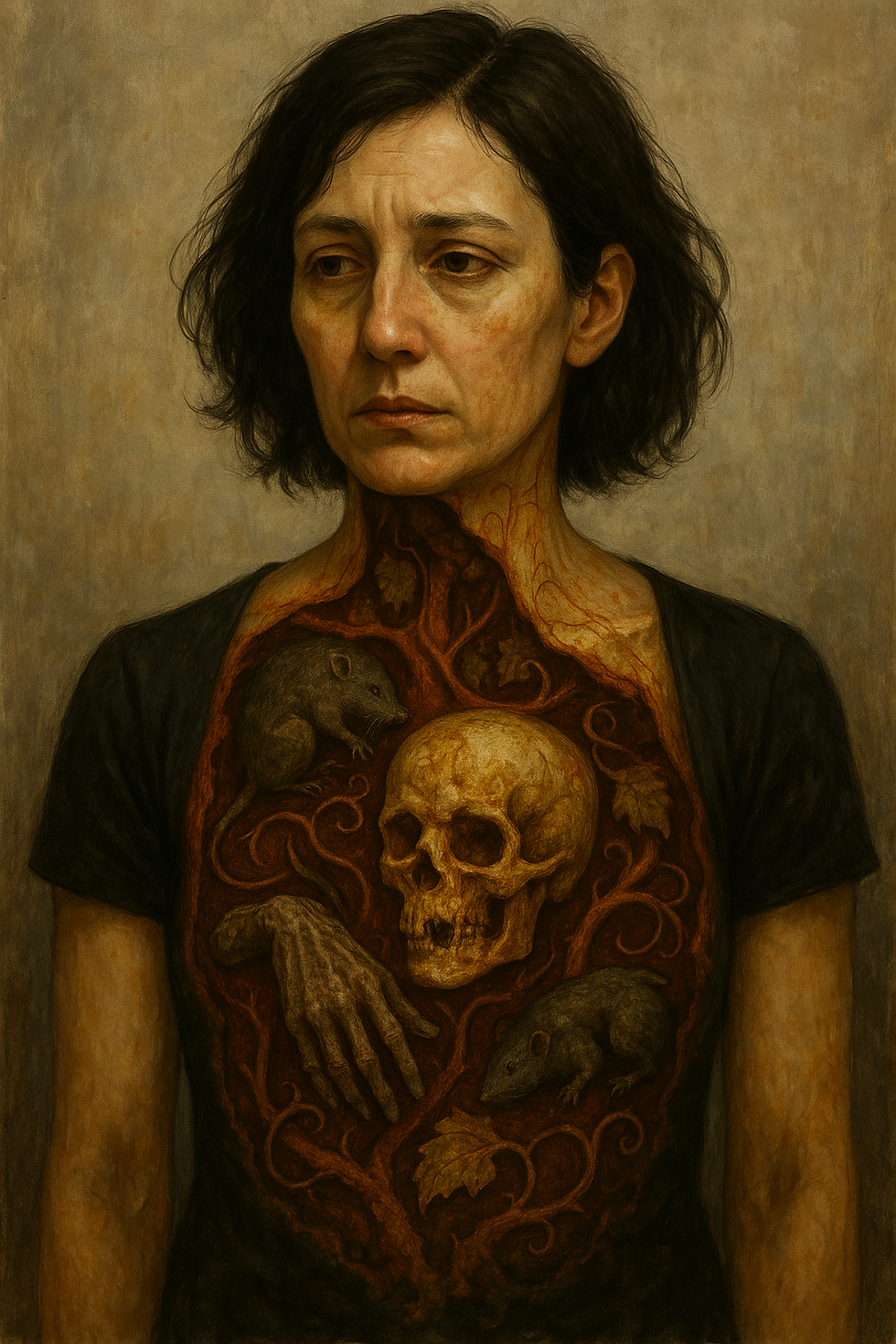
What struck me this time wasn’t the “plot” in a traditional sense, but how every small event exposes the narrator’s moral decay. The story’s external details (a trip to the market, a dead cat, a pregnancy) aren’t plot points so much as pressure points. Each moment presses harder on who she really is.
As a writer, that’s a reminder to me that plot doesn’t have to mean explosions or chases. It can be a slow peeling back of character, where every small turn of the story reveals something rawer underneath.
The power of discomfort
Reading Moshfegh always makes me squirm a little, and I think that’s the point. She writes characters who are petty, cruel, and self-absorbed, but she does it with such precision that it’s impossible to look away. Her work reminds me that fiction’s job isn’t to make readers comfortable; it’s to make them feel something real.
When I’m drafting, I sometimes find myself pulling back when a scene starts to feel “too much”—too dark, too unlikable, too close to the bone. But Moshfegh pushes forward. She uses discomfort as a narrative tool, and that’s something I want to practice more consciously: letting unease reveal humanity rather than avoiding it.
Precision and the mundane
Another thing that stood out to me this time is her use of visceral, precise detail. The texture of a greasy countertop. The smell of heat and decay. The sharp contrast between the narrator’s self-importance and the grimy ordinariness around her.
None of it feels gratuitous. The sensory world isn’t there to decorate—it is the story. The ugliness of the setting mirrors the narrator’s internal landscape, and the result is this claustrophobic realism that lingers long after the story ends.
It’s a lesson in how to make setting work as psychology. Every detail should earn its place; every description should tell us something about how the character sees the world.
My Final Short Fiction Friday Takeaway:

What I love about “Slumming” is that it’s a masterclass in restraint and exposure at the same time. There’s no neat resolution, no redemption, but there’s revelation. And that’s what good short fiction often gives us.
As I work on my own stories, I want to remember how Moshfegh builds narrative weight not from what happens but from what’s revealed through what happens.
Plot and character aren’t separate threads. I think instead, they’re woven together so tightly that each breath the character takes becomes part of the story’s momentum.
If you haven’t read “Slumming,” it’s worth sitting with it, not for comfort, but for the reminder that fiction can be messy, unsettling, and deeply human all at once.
Have you read Ottessa Moshfegh’s work? Do you have a favorite story of hers? I’d love to hear your thoughts in the comments or send me a note!
Peace & Plenty,


Comments